

Creating a national database of unreinforced masonry buildings (NHRA T7-A4)
Year:
2026
At a glance
This research addresses critical gaps in the availability of a nationally consistent, geo-tagged database of unreinforced masonry (URM) buildings across Australia. URM structures are widely recognised as potentially vulnerable during earthquake events and can pose significant risks to life safety, emergency response operations, and post-disaster recovery. This project is developing a comprehensive and accessible national inventory that will enable emergency management organisations to strengthen risk mitigation strategies.
Existing databases are fragmented and rely heavily on time-consuming and costly manual surveys that are inconsistent across jurisdictions. This research responds to the needs identified by key emergency management stakeholders, including the Queensland Fire Department, South Australia Police, Department of Fire and Emergency Services Western Australia, and Fire and Rescue NSW. It leverages artificial intelligence (AI) and computer vision techniques to detect and classify URM buildings at scale. The resulting geospatial database will support improved preparedness of emergency management agencies across Australia, particularly in scenarios involving large buildings and resource constraints.
Organisation, sector and geographical location involved
The project is funded by Natural Hazards Research Australia (NHRA) and led by Queensland University of Technology (QUT) in collaboration with the University of Newcastle and emergency management organisations across Australia.
Through ongoing engagement with stakeholders and utilisation activities, the research supports continuous improvement in earthquake risk mitigation primarily by strengthening emergency planning and preparedness.
Key findings or outcomes of the research
At time of writing this case study, the project is approximately 45 per cent complete and has developed an automated pipeline for detecting and geo-tagging URM buildings across Australia using AI and computer vision techniques. The methodology integrates satellite imagery, large geospatial datasets, and street-level imagery to identify and classify buildings that may exhibit characteristics associated with URM construction.
Preliminary results indicate that, within the practical limitations of current AI and computer vision technologies, automated identification of URM building types is both feasible and cost-effective when compared with traditional field surveys. This highlights the potential for scalable national assessments of vulnerable building stock.
As the project is ongoing, the full set of outcomes and operational applications for emergency management stakeholders is still being developed. Remaining work will focus on completing the datasets and demonstrating how the resulting database can support mitigation planning and disaster preparedness activities.
What this means for the disaster management sector
This project delivers the first nationally consistent geospatial inventory of potentially vulnerable URM buildings in Australia. Once all URM buildings are identified, the standardised classification across jurisdictions allows the disaster management sector to adopt a more coordinated and comparable approach to earthquake risk assessment, preparedness, and mitigation planning. Emergency management stakeholders access, contribute to, and learn from shared datasets and mitigation strategies, supporting collaboration and knowledge exchange nationally.
The database is delivered in a GIS-compatible format, enabling spatial analysis of URM building distributions, surrounding infrastructure, and access routes. This information integrates with existing or emerging earthquake monitoring and alert systems to help identify areas where building damage and community impacts are more likely to occur.
The dataset supports preparedness activities, such as developing realistic training scenarios for Urban Search and Rescue (USAR) teams. Beyond emergency response, the database provides valuable exposure information for government agencies, planners, and the insurance sector to support earthquake scenarios development and proactive mitigation strategies. Collectively, these capabilities support evidence-based planning, improve situational awareness, and disaster resilience across Australia.
Entities relevant to this research include universities, state and local governments, emergency management organisations, planning authorities, and the insurance sector. These groups play key roles in identifying, assessing, and managing risks associated with vulnerable building stock and contribute to the development and utilisation of geospatial datasets disaster risk management.
The study primarily focuses on the earthquake hazard, with particular attention to the vulnerability of URM buildings. It also considers the implications of earthquake impacts for urban environments, critical infrastructure, and emergency response operations.
Thematically, the work focuses on collaboration and coordination, continuous improvement, risk management, preparedness planning, and resilience. It also highlights the role of AI, computer vision, geospatial analysis, and exposure databases in enabling large-scale risk identification and coordinated mitigation strategies across jurisdictions.
Key search words
Unreinforced masonry (URM) buildings; Earthquake risk mitigation; Seismic vulnerability; Building exposure database; Artificial intelligence (AI); Computer vision; Convolutional neural networks (CNN); Geospatial analysis; Geographic Information Systems (GIS); Satellite imagery; Street-level imagery; Automated building detection; Disaster risk reduction; Emergency management; Urban search and rescue (USAR); Earthquake preparedness
Introduction
Legacy URM buildings present significant earthquake risk in Australia. There are approximately 1,100 such buildings in Queensland, mostly concentrated in the central business districts. Built prior to seismic design codes, these structures were designed mainly for gravity loads, with no consideration of earthquake forces. Australia experiences one to two magnitude-5 (M5) earthquakes annually, with one of these earthquakes occurring in Queensland every five years. Earthquakes of this size can damage URM buildings, as demonstrated by the 1989 Newcastle earthquake (M5.6).
Research problem
In the event of an earthquake affecting a major Australian town, damage to URM buildings may present significant challenges for emergency management organisations. Concentrated damage in heritage precincts, may delay search and rescue operations due to factors including road blockages from debris, restricted access to damaged structures, and high logistical support demands that may exceed available capacity.
Effective preparation and training require a comprehensive and accurate understanding of URM buildings. However, a national database of these buildings is currently unavailable, or exists only in a limited and fragmented form across certain regions of Australia. This gap constrains the development of a coordinated and consistent framework for training exercises and emergency response planning among stakeholders across Australian states.
Research aim
The project seeks to document the presence of URM buildings nationwide and classify them into seismic vulnerability groups. The primary output will be GIS maps containing URM building footprints. The project also includes utilisation activities to strengthen emergency management organisations to use the datasets for improved risk mitigation and preparedness.
Significance
This project makes a significant contribution to seismic risk reduction across Australia, particularly given the disproportionately high earthquake risk associated with URM buildings and the concentration of these structures within populated areas.
Methodology
By integrating AI, computer vision, and geospatial technologies, the project aims to automatically detect URM buildings using big data, satellite imagery and publicly available street view images. Images of known URM buildings are being used to train a class of computer algorithms known as Convolutional Neural Networks (CNNs). Once trained, the CNN will automatically detect URM buildings from street-level imagery. This approach removes the need for extensive foot surveys, substantially reducing associated costs.
The workflow comprises three stages:
1. Training data collection (completed as of March 2026)
2. CNN model training (commenced)
3. Automated building detection (to start June 2026).
Much of this process involves automated retrieval of building images and footprints from platforms such as Google, Bing, and Microsoft, along with computer coding to detect and classify images.
Results and discussion
The results to date include:
a) Establishing definitions and classifications for vulnerable groups, in consultation with stakeholders
b) Development of a full pipeline to collect street view images from multiple sources (e.g. Microsoft, Bing and Google)
c) Automated image collection for known URM buildings for CNN training
d) Annotation of the building images using specialised software for CNN training.
The buildings include previously surveyed URM buildings in Queensland and many URM buildings from other Australian cities, including Sydney, Adelaide and Melbourne.
Conclusion (implications, impact & insights)
The research demonstrates the value of AI and computer vision for systematically detecting and classifying URM buildings, enabling faster and more economical seismic risk mitigation strategies. It also provides a proof-of-concept for this methodology that may be applicable to other hazard building types.
The study delivers a national GIS database of URM buildings, offering emergency management agencies a structured tool for mitigation planning, preparedness exercises, and coordinated response strategies.
The project strengthens cross-agency collaboration and supports interoperable building data, contributing to improved earthquake preparedness and resilience. Integrating these insights into disaster risk reduction frameworks helps ensure risk-informed planning and mitigation becomes standard practice across the sector.
What the results mean for disaster management in Queensland
From Queensland Fire Department’s perspective, the creation of a national database of URM buildings represents a significant advancement in delivering hazard and risk intelligence for earthquakes. By harnessing geospatial data, AI, and computer vision, the project provides a practical and scalable solution to enhance earthquake preparedness, response, and recovery.
The resulting GIS maps of URM building locations help emergency services anticipate and mitigate seismic risks, particularly in urban areas with dense concentrations of vulnerable structures. This supports more precise and effective urban search and rescue operations, rapid damage assessments, ultimately helping to safeguard communities and minimise impacts. The project also sets a benchmark for modern, technology enabled risk-informed decision-making, demonstrating how emerging capabilities can be integrated into contemporary disaster management practice.
Next steps
Next steps include training the CNN using the developed pipeline to automatically detect URM buildings and presenting the results in a GIS-based database for emergency management stakeholders. Engagement meetings and workshops will explore how the dataset can support mitigation planning, preparedness exercises, and integration with alert systems. These activities will ensure the database is practical, accessible, and supports evidence-based risk reduction, enabling stakeholders to enhance earthquake preparedness and resilience across jurisdictions.
References
Project profile including link to presentations in the funding agency website:

Natural Hazards Research Australia (NHRA) website
Questions?
Please email all questions and photos to: research@igem.qld.gov.au
Research Connect case studies webpage
NHRA Project Manager
Nicola Moore; Node Research Manager Qld & NT (nicola.moore@naturalhazards.com.au)
Researchers
Dr Hossein Derakhshan; Senior Lecturer (QUT) and NHRA Principal Researcher (hossein.derakhshan@qut.edu.au)
Dr Alan Woodley; Senior Lecturer (QUT) and NHRA Chief Investigator (a.woodley@qut.edu.au)
Prof Mark Masia; Professor (University of Newcastle) and NHRA Chief Investigator (m.masia@newcastle.edu.au)
Dr Abdullah Nazib; Postdoctoral Research Associate (QUT and NHRA; a.nazib@qut.edu.au)
Dr Nouman Khattak; Postdoctoral Research Associate (QUT and NHRA; n.khattak@qut.edu.au)
Qld key stakeholders
Matthew Dyer; Queensland Fire Department (matthew.dyer@fire.qld.gov.au)
Dr Jane Sexton; Queensland Fire Department (jane.sexton@fire.qld.gov.au)
Advancing accessible emergency communication: Co-designing digital solutions for Deaf and Hard-of-Hearing communities in Queensland
Researcher:
Pallav Pant, MA CMS, MA JMC, PhD Candidate, School of Medicine and Dentistry
Griffith University
At a glance
This research addresses critical gaps in the availability of real-time, accessible emergency communication for Deaf and Hard-of-Hearing (DHH) individuals, who often cannot reliably receive, interpret or respond to alerts during emergencies. Current emergency communication solutions frequently suffer from poor interface design, limited accessible communication features, and insufficient attention to the linguistic, cultural, and sensory needs of DHH communities, all of which can dimmish their effectiveness and equity.
DHH communities can sometimes be excluded from the co-design processes for emergency communication strategies, resulting in tools and processes misaligned with lived experience. In particular, the research highlights the lack of inclusive emergency messaging and preparedness tools in Queensland, one of Australia’s most disaster-prone regions, where recuring events highlight the urgent need for tailored, equitable communication systems that meet the needs of DHH individuals (Calgaro et al., 2021; Chapman et al., 2025; Cripps et al., 2024).
Organisation, sector and geographical location involved
The project is a university-led initiative based at Griffith University and carried out in close collaboration with DHH organisations, advocacy groups, self-advocates and service providers, who bring specialist expertise and community-driven perspectives to the research. Operating within the disaster management and health sectors in Queensland the study operates at the intersection of public health, emergency management, and disability inclusion, enabling cross-sector insights to inform both policy and practice.
This partnership-based approach ensures that research findings are grounded in real-world operational contexts while remaining responsive to the priorities and lived experiences of DHH communities across Queensland.
Key findings or outcomes of the research
The research has identified a range of experiences and challenges faced by DHH individuals in accessing timely, two-way emergency information, including barriers related to notification channels, message formats, and opportunities for feedback or clarification. Through engaging DHH individuals, service providers, and emergency managers in co-design activities, the study has demonstrated the value of participatory methods in developing prototype digital tools tailored to user needs and preferences, rather than merely modifying mainstream systems.
These co-design processes have also generated targeted recommendations for policy and practice aimed at strengthening resilient and inclusive emergency communication systems. Collectively, the outcomes supports a broader shift towards structurally embedding accessibility and disability inclusion within disaster risk reduction efforts (Benz et al., 2024; Villeneuve et al., 2019).
What this means for the disaster management sector
For the disaster management sector, the research reinforces that inclusion is fundamental, and that emergency communication strategies must be developed in genuine collaboration with at-risk communities. Applying co-design and universal design principles ensures that systems are both usable and meaningful for DHH individuals. Providing information in multiple modalities, such as simple text, video with closed caption, Auslan, and plain English, not only enhances accessibility but also improves safety and resilience by allowing people to select formats that best align with their communication preferences and situational needs.
The findings further highlight the need for disaster management to embed accessibility, cross-sector collaboration, and real user testing into emergency planning frameworks. Doing so helps ensure that policies, procedures, and technologies align with obligations under instruments such as the United Nations Convention on the Rights of Persons with Disabilities (UNCRPD) and follow best practice guidance in disaster risk reduction. (Australian Institute for Disaster Resilience, 2013; Calgaro et al., 2021; United Nations, 2006)
Key search words
The entities relevant to this research include state and local governments, universities, non-governmental organisations, Organisations of Persons with Disabilities (OPDs), and diverse communities of Deaf and Hard of Hearing individuals, all of whom play important roles in shaping, delivering, or being impacted by emergency communication systems.
The study spans a wide spectrum of hazards, including cyclone, fire, flood, storm, domestic and household fire, arson, heatwave, hailstorm, pandemic, wildfire, earthquake, tsunami, bush fire, volcano, thunderstorms, extreme heat, cold wave, drought, landslide, tornadoes, hurricane, typhoon, cyclones, and telecommunication failure, reflecting the multi-hazard environment in which DHH communities must navigate risk.
Thematically, the work focuses on community engagement, collaboration and coordination, resilience, planning, operations, risk management, capability integration, accessible communication, and universal design, highlighting the need for systemic approaches that embed accessibility throughout the disaster management cycle.
Introduction
Communication plays a vital role during disasters and emergencies, enabling people to receive warnings, understand evolving risks, and take timely action to protect themselves and others. For DHH individuals, communication barriers are compounded by the fact that they live with an invisible disability and are part of cultural and linguistic minority groups, which shapes how they access, interpret, and respond to information during crises. Globally, more than 5% of the population, approximately 430 million people, experience deafness or hearing loss, highlighting the scale and international relevance of this issue (World Health Organization, 2021).
Although timely action is critical to reducing risk during emergencies, DHH communities often face significant challenges when interacting with first responders and emergency systems. Many are frequently left behind due to the absence of direct, accessible, and two-way communication channels that support interaction in formats they can use (Calgaro et al., 2021; Engelman et al., 2013).
Queensland, as one of Australia’s most disaster-prone states, has experienced over 97 significant events between 2011 and 2021 across diverse urban, regional, and remote areas. This frequency of hazards underscores the urgency of ensuring that DHH populations can reliably access, understand, and act on life-saving information within this high-risk environment. (Johnson et al., 2024).
Problem/question
How can digital solutions be co-designed to ensure accessible, effective emergency communication for Deaf and Hard of Hearing individuals?
Aim
The aim of the research is to develop and validate digital tools for inclusive emergency communication through a participatory, co-design approach involving DHH individuals and key stakeholders. By grounding tool development in shared design processes and iterative testing, the study seeks to create solutions that are contextually appropriate, user-centred, accessible and capable of enhancing safety and preparedness for DHH communities.
Significance
The significance of this work lies in its response to current disaster communication practices that frequently exclude DHH communities, increasing their exposure to risk, vulnerability, and likelihood of adverse outcomes during emergencies (Calgaro et al., 2021; United Nations, 2006; World Bank, 2022). By demonstrating how accessible, co-designed digital tools can address these gaps, the research advances to both the advancement of disability-inclusive disaster risk reduction and the fulfilment of international commitments to protect the rights and safety of persons with disabilities in situations of risk. (Calgaro et al., 2021; United Nations, 2006; World Bank, 2022)
Methodology
This research employs a qualitative approach, incorporating a phenomenological design to explore events from individuals' perspectives and develop a deeper understanding of their lived experiences. It adopts a mixed methods framework that integrates a scoping review, key informant interviews, and participatory co-design workshops to build a comprehensive understanding of both the problem and potential solutions.
The scoping review maps existing evidence and current practice in accessible emergency communication for DHH communities. Key informant interviews then provide in-depth insights from DHH individuals, service providers, and emergency managers, capturing lived experiences and system-level barriers that shape communication inequities
These insights directly inform the structure and content of co-design workshops, where participants collaboratively generate, refine, and test ideas for digital tools, ensuring that emerging solutions are grounded in real-world needs, practical expertise and the communication preferences of the DHH communities
Data analysis techniques
For the qualitative components of the research, thematic analysis is used to identify patterns, concepts, and relationships within the data, enabling the research team to distil key themes related to accessibility, communication, and co-design. In parallel, iterative prototyping and user feedback cycles within the workshops enable continuous refinement of digital tools, with each workshop cycle informing adjustments to interface design, content, and functionality. Together, this combination of thematic analysis and iterative prototyping supports a rigorous yet flexible approach in which empirical insights directly guide the development, evolution and evaluation of the proposed solutions.
Results and discussion
The emerging interpretation from this research suggests that inclusive, thoroughly tested tools, supported by integrated cross-agency protocols, can significantly improve real-time information access and enhance community safety for DHH individuals, particularly when embedded within broader systems of coordinated response (Chapman et al., 2025; Craig et al., 2019; Villeneuve et al., 2019). Designing tools with and for DHH users, coupled with agencies collaborating to implement consistent, accessible communication practices, helps reduce fragmentation and ensure that critical communication messages reach people in formats they can use. At present, the research is ongoing, with ethical approval recently granted. Subsequent stages of data collection and co-design will continue to refine these emerging insights and inform more detailed recommendations.
Conclusion (implications, impact & insights)
In terms of theoretical implications, the study highlights the value of participatory and universal design approaches within the public health and disaster management, demonstrating their practical relevance in improving emergency communication for marginalised groups. From a practice perspective, the research provides a replicable framework for developing accessible emergency messaging, offering agencies a structured approach to redesigning their systems to better meet the needs of the DHH communities and other at-risk populations.
At the policy level, the findings emphasise the need for the systematic integration of accessibility and disability inclusion into disaster risk reduction policies and emergency operations at all levels. Embedding these principles ensures that inclusive communication becomes the standard practice norm rather than the exception.
What the results mean for disaster management in Queensland
For disaster management in Queensland, the results show that the sector can achieve more equitable outcomes by embedding accessible emergency communication across planning, response, and recovery activities, rather than treating accessibility as an add-on. Doing so will not only benefit DHH communities directly but will also help stakeholders, including government agencies, service providers, and community organisations, to better understand the challenges faced by DHH individuals and to develop more inclusive policy, funding mechanisms, standards, and training programs that address these challenges in a sustained way (Calgaro et al., 2021; Chapman et al., 2022). Over time, such shifts can contribute to a more resilient, inclusive disaster management system that aligns with both human rights obligations and evidence-based best practice (Calgaro et al., 2021; Chapman et al., 2022).
Next steps
The next steps for this research include expanding prototype testing to broader groups of DHH individuals and other stakeholders to assess usability, effectiveness, and acceptability in diverse contexts. The study will also focus on integrating the digital tools with existing emergency agency workflows, ensuring that they can be realistically implemented and maintained within current systems and resource constraints. Ongoing monitoring and evaluation will guide further refinement of the digital solutions over time, enabling continuous improvement and adaptation as technologies, hazards, and community needs evolve.
References
Australian Institute for Disaster Resilience. (2013). Communicating with People with a Disability: National Guidelines for Emergency Managers. East Melbourne Vic 3002: The Australian Institute for Disaster Resilience
Benz, C., Scott-Jeffs, W., McKercher, K., Welsh, M., Norman, R., Hendrie, D., Locantro, M., & Robinson, S. (2024). Community-based participatory-research through co-design: supporting collaboration from all sides of disability. Research Involvement and Engagement, 10(1), 47.
Calgaro, E., Craig, N., Craig, L., Dominey-Howes, D., & Allen, J. (2021). Silent no more: Identifying and breaking through the barriers that d/Deaf people face in responding to hazards and disasters. International Journal of Disaster Risk Reduction, 57, 102156.
Chapman, K., Allen, C., & Kendall, E. (2025). Methods for Co-designing Health Communication Initiatives with People with Disability: A Scoping Review. Journal of Health Communication, 1-13.
Chapman, K., Norwood, M., Shirota, C., Palipana, D., & Kendall, E. (2022). An undignified disaster reality for Australians with disability. Australian health review, 46(6), 710-712.
Craig, L., Craig, N., Calgaro, E., Dominey-Howes, D., & Johnson, K. (2019). People with disabilities: becoming agents of change in disaster risk reduction. In Emerging voices in natural hazards research (pp. 327-356). Elsevier.
Cripps, J. H., Austin, E. N., & Craig, L. (2024). A case study of university mass casualty simulation with high school deaf students who sign [Article]. Journal of Emergency Management, 22(5), 535-558. https://doi.org/10.5055/jem.0864
Engelman, A., Ivey, S. L., Tseng, W., Dahrouge, D., Brune, J., & Neuhauser, L. (2013). Responding to the deaf in disasters: establishing the need for systematic training for state-level emergency management agencies and community organizations. BMC health services research, 13, 1-10.
Johnson, L., O’Rourke, S., Mullins, G., Rice, M., & Tidswell, K. (2024). STATE OF QUEENSLAND: DISASTER GROUND ZERO.
United Nations. Convention on the Rights of Persons with Disabilities (CRPD). United Nations. https://social.desa.un.org/issues/disability/crpd/convention-on-the-rights-of-persons-with-disabilities-crpd
United Nations. (2006). Convention on the Rights of Persons with Disabilities and Optional Protocol (A/RES/61/106). United Nations Retrieved from https://www.un.org/disabilities/documents/convention/convoptprot-e.pdf
Villeneuve, M., Dwine, B., Moss, M., Abson, L., & Pertiwi, P. (2019). Disability Inclusive Disaster Risk Reduction (DIDRR) Framework and Toolkit. The Centre for Disability Research and Policy, The University of Sydney
World Bank. (2022). Inclusive Approaches to Disaster Risk Management: A Qualitative Review. World Bank Group.
World Health Organization. (2021). Deafness and Hearing Loss. World Health Organization. https://www.who.int/news-room/fact-sheets/detail/deafness-and-hearing-loss#:~:text=Overview,will%20have%20disabling%20hearing%20loss.
Data-driven recommendations for enhancing real-time natural hazards warnings: case study of the 2022 floods
Year:
2025
Researcher:
Dr Kate Saunders (Monash University) (Refer to Saunders et al. 2025 for full author list)
E: kate.saunders@monash.edu
Monash University
Researchers
Dr Kate Saunders, Monash University
At a glance
This case study reviews gaps in the real-time warning communication made available to the public during the 2022 floods and makes several data-driven recommendations to enhance future warnings.
Key search words
Universities, cyclone, failure, disruption of essential services, disruption infrastructure, fire, flood, storm, storm tide, storm surge, collaboration, coordination, community engagement, continuous engagement, continuous improvement, governance, managing risk, planning, plans, resilience.
Introduction
The effectiveness of natural hazard warnings relies on transforming the available data into actionable knowledge for the public. However, gaps exist between established data science best practices and how data is being used to support natural hazard warnings and their communication. At present, retrospective evaluation of warning effectiveness and hazard response is often limited, with empirical evaluation of warning systems and their effect on human behaviour lagging (Saunders et al, 2025).
During flooding in Queensland in 2022, the public faced a deluge of digital warning information. They were accessing multiple different websites to piece together the information relevant to them (Saunders et al, 2025). This data-synthesis was happening ad-hoc and across varying levels of digital literacy.
More research is needed to understand how data underpins warnings and their communication, and whether the current use of data to support warnings is effective. Importantly, this includes assessing whether the data and its visualisation are adequately supporting the public to make timely and well-informed decisions.
To address these gaps, an inter-disciplinary perspective was written, “Data-driven recommendations for real-time natural hazards warnings” (Saunders et al. 2025).
Data-driven recommendations
Remove existing data barriers
o Data may exist, but it may not be in a usable form.
e.g. There are a range of data sets that cannot be easily used as the data is not machine readable or stored appropriately.
Recommendation: Improve the quality and interoperability of this data for warnings by implementing five-star open data standards and using FAIR (Findable, Accessible, Interoperable, Reusable) data principles.
o Data silos prevent seamless information sharing across organisations.
e.g. Border communities should not need to access warning information from different state-based apps. A problem observed again during Tropical Cyclone Alfred 2025. Warning information should be shared seamlessly across platforms, such as the Queensland Hazard dashboard and NSW Hazard Watch.
Recommendation: Minimise institutional, legal, and logistical barriers contributing to data siloing by establish formal data sharing agreements, including provisions for sharing data, code, and models. Ensure these data pipelines are functional. To ease this process, where possible make the data open.
o Critical data disappears during and after the events.
e.g. Screenshots of warning information were taken to independently review the information in hindsight. Any data on public warnings should be archived appropriately for later reference.
Recommendation: Identify data loss and use gold standards in data-curation and reproducible research to better preserve this data for effective post-event evaluation.Adopt data visualisation best practices
o The visualisation provided to the public did not support their decision making
e.g. Static maps were common, yet people increasingly expect interactive tools to support decision making.
Recommendation: Data visualisation best-practices should always be used, including using appropriate visual hierarchy and graphical principles. Interactive features should be leveraged to position warnings in the user’s personal context and reduce cognitive load, such as searching, zooming, pop-ups, and information layering. Upskilling and education in visualisation are also important for public institutions sharing warning information, given the highly variable expertise across institutions that issuing warnings.Use novel data sources to improve warnings
o Traditional data sources are not enough to understand on-the-ground conditions
e.g. Road closures in Google Maps were out of date during the 2022 Brisbane floods. In contrast, Waze, a crowd-sourced plat form, provided more reliable crowd-sourced information about road closures.
Recommendation: Identify opportunities for where non-traditional data sources could fill knowledge gaps. Focus particularly on locations with limited official hazard and impact warning support. Leverage published data-science methods for integrating these low-cost data sources including, satellite remote sensing, drones, social media analyses, web-scraping and crowdsourced data.o Despite ad hoc information-sharing being a vital part of warning communications, such as on Facebook and X (formerly Twitter), there are no formal mechanisms for using crowd-sourced data in official warnings.
e.g. Healthy Land and Water showed how data can be effectively collected from the public, by setting up an online platform to collect photos of flooding in real-time and so they could record ecological impacts.
Recommendation: Invest in developing mechanisms to strategically use novel data sources, such as crowd-sourced data, to support warning communication. This will need to include developing methods to quality control the data.Embracing uncertainty
o Uncertainty is not currently well communicated or visualised.
e.g. There is uncertainty in predicted flood extents and there is uncertainty in the
o 1% AEP level (formerly 1-in-100-year return level).
Recommendation: Best practice visualisation principles apply here too. Uncertainty visualisation also needs to be tailored to specific audiences. For agencies coordinating the response, the visualisation needs may differ from those of the public
o Only one scenario or single-trajectory forecast is often communicated. How uncertainty is propagated along the warning value chain (Hoffmann et al. 2023) needs to be carefully considered and factored into emergency planning and warning communication.
e.g. Yet uncertainty can support decision making if communicated well, giving communities vital additional time to prepare to act. This is shown by weather forecasts which communicate uncertainty.
Recommendation:
Avoid relying on single-trajectory forecasts or summary statistics when an ensemble forecast is available. Where possible, propagate uncertainty through the warning value chain to assess the full range of possible outcomes (weather forecasts → hazard forecasts → impact forecasts → warnings).
Conclusion
The research reveals opportunities for how data science best practices can be used to improve the effectiveness of natural hazard warnings. The work also demonstrates how warning-value chain can be used to understand where and how data is used, and how data interconnects for effective warnings.
Overall recommendations and policy implications
Post-disaster evaluation should include assessment from a data-driven perspective. This should include:
- assessment of how the data was used
- assessment of whether the data was fit for purpose
- a review of whether data was shared effectively between organisations
- identification of any missing or incomplete data.
Effectiveness of communicated hazard and impact warnings should also be reviewed in the context of data visualisation best practices, and whether that data and visualisation adequately supported decision-making.
There is also clear need for cross-jurisdictional sharing of data. This requires:
- establishment of formalised data sharing agreements, particularly for border region
- revisiting existing government frameworks for data curation, sharing and updating these for modern needs.
The research highlights significant potential for ongoing collaboration between data science and natural hazards communities. Future work should focus on operationalising the above recommendations through partnerships that combine technical expertise with deep understanding of community needs and emergency management constraints.
Acknowledgements
The ideas of this case study were first identified during a hackathon run in rapid response to the 2022 Brisbane floods. This hackathon aimed to capture the ephemeral nature of data during a natural disaster event and characterise and review the real-time response. Affectionately, the volunteers who attended the hackathon formed a ‘digital’ mud army, using their technical experience to its greatest societal benefit. This case study is therefore motivated by the authors’ own experiences during the Brisbane flooding and provides the unique dual perspective of both experienced data practitioner and firsthand witness.
References
Saunders, K. R., Forbes, O., Hopf, J. K., Patterson, C. R., Vollert, S. A., Brown, K., ... & Helmstedt, K. J. (2025). Data-driven recommendations for enhancing real-time natural hazard warnings. One Earth, 8(5).
Data-driven recommendations for enhancing real-time natural hazard warnings - ScienceDirect
Hoffmann, D., Ebert, E. E., Mooney, C., Golding, B., & Potter, S. (2023). Using value chain approaches to evaluate the end-to-end warning chain. Advances in Science and Research 20: 73-79.
Image credit: Queensland Fire Department
Evolution of the Crisis Management Team Structure
Year:
2025
Researcher:
Sherry Paterson
City of Logan, SherryPaterson@logan.qld.gov.au
Entity:
Local government
At a glance
- Highlighted gaps: Outdated plans, limited training and structural misalignment.
- Organisation: Logan City Council
- Collaboration: Worked extensively with Phoenix Resilience to co-design and validate the new Crisis Management Team (CMT) structure
- Key findings:
- Integrated structures improve response: Aligning the Crisis Management Team (CMT) with the Local Disaster Coordination Centre (LDCC) and Australasian Inter-Service Incident Management System (AIIMS) enhances coordination and clarity.
- Dynamic planning is essential: Activation triggers and scenario-based exercises are more effective than static plans.
- Shared responsibility drives resilience: Embedding crisis readiness across teams reduces reliance on discretionary effort and improves sustainability.
- Sector relevance: Integrated crisis management, shared responsibility, continuous improvement.
Introduction
Prior to the COVID-19 pandemic, business continuity planning at Logan City Council was managed by a small group of staff within the Risk Management and Insurance Program. This responsibility was not their primary role, and planning relied heavily on static documents, including a 98-page Master Business Continuity Plan (Master BCP) and six directorate recovery plans. These documents were not utilised during the pandemic response, revealing a critical gap in practical and adaptive crisis management.
This case study explores how Logan City Council evolved its crisis management structures to better align with contemporary emergency response needs, particularly through the integration of business continuity and disaster management functions.
Methodology
Internal audits and training reviews identified that Council’s business continuity plans had not been updated for more than three years and no longer reflected the current organisational structure. In response, a targeted initiative was launched to address the audit findings and incorporate feedback from training sessions.
A key focus was the structure and function of the Crisis Management Team (CMT). Initial efforts to revise the CMT structure were met with resistance. To facilitate change, Phoenix Resilience was engaged to conduct a targeted exercise with the CMT, guided by the Australian Institute for Disaster Resilience principles on exercise management. This approach enabled team members to critically assess the effectiveness of the existing structure and identify opportunities for improvement from their own perspective.
Insights from the exercise were combined with established disaster management practices and the LDCC Framework, which operates under the AIIMS model. This ensured the revised structure was fit for purpose and aligned with recognised principles of interoperability, role clarity and consistent operational language.
Discussion of results
The CMT desktop exercise was a pivotal moment in identifying structural inefficiencies and opportunities for improvement. Phoenix Resilience played a critical role in shaping these outcomes, providing strategic advice and practical frameworks that informed the new CMT model.
Key outcomes included:
- Simplification of activation protocols
- Proactive posture alignment with LDCC
- Structural redesign with new functional roles and a CMT Coordinator (similar to an Incident Controller)
- Interoperability with LDCC and AIIMS
- Validation through training and the 2024 Exercise Series
- Real-world application during ex-Tropical Cyclone Alfred
During the exercise, the team critically assessed the existing CMT framework and recommended substantial changes. A key finding was that the activation matrix within the master Business Continuity Plan (BCP) was overly complex and prescriptive. In response, the team proposed a simplified set of activation triggers aligned with disaster management practices, enabling more timely and risk-informed decision-making.
The exercise also underscored the importance of a proactive posture for the CMT. It was agreed that when the LDCC transitions to 'stand up' status, the CMT should shift to 'lean forward'—gathering intelligence and assessing impacts on council infrastructure, services, and staff. This recommendation informed the development of a new crisis management and business continuity plan, replacing the outdated Master BCP and directorate recovery plans.
Based on feedback from the exercise, a revised CMT structure was implemented. Key enhancements included the introduction of functional roles such as People and Safety, Intelligence and Planning, and Business Recovery, along with the appointment of a dedicated CMT Coordinator to strengthen leadership and coordination. The new structure mirrors the LDCC framework and adopts the AIIMS model, ensuring interoperability and consistent operational language.
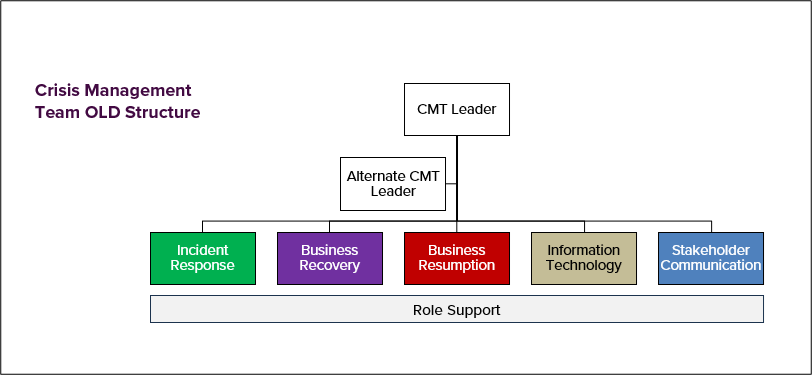
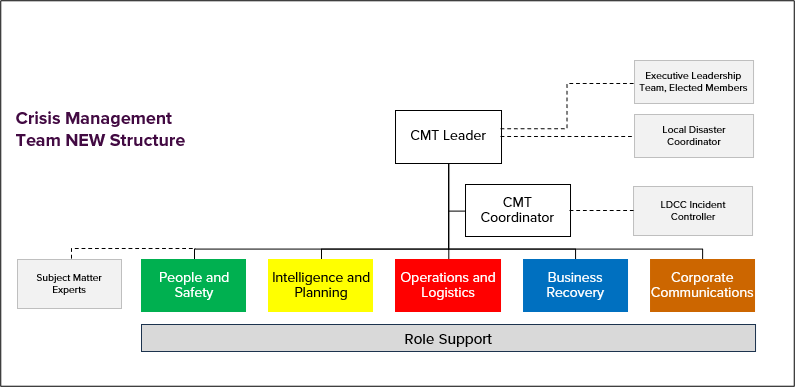
To validate the revised structure and planning approach, a comprehensive training program was developed. It focused on cell-based collaboration, situational awareness, dynamic risk assessment, and mental health support. The program culminated in the 2024 Exercise Series, which simulated a Southeast Queensland-wide power outage as a result of a cyberattack on the power grid. This was the first simultaneous activation of both the CMT and LDCC, demonstrating the benefits of an integrated approach. The CMT concentrated on organisational impacts and risks, while the LDCC managed community consequences. The exercise highlighted strong collaboration, proactive thinking, and the need for improved resource allocation and information sharing.
The evolution of the CMT structure reinforced the value of clear roles, streamlined communication, and integrated planning. Practitioners benefit from a shared operating picture, reduced duplication and enhanced resource coordination. The effectiveness of the new model was confirmed during the response to Ex-Tropical Cyclone Alfred, where the revised structure supported a unified and agile crisis response.
Conclusion
This case study supports a shift toward integrated and collaborative crisis management. The revised CMT structure demonstrates the value of aligning business continuity and disaster management functions to enhance preparedness and enable rapid, coordinated responses.
By embedding interoperability into policy and practice, the new model fosters consistency, clarity, and resilience across council operations. It reduces pressure on LDCC functions during disaster events and strengthens the organisation’s capacity to recover services efficiently.
This evolution reflects the sector-wide principle of shared responsibility, where crisis preparedness and response are not confined to a single team but are distributed across interconnected functions. The alignment with the AIIMS and LDCC frameworks ensures a common operating language and facilitates seamless collaboration during complex events.
In the spirit of continuous improvement, the next steps include:
- Trialling a coordinated exercise week involving all groups using a common scenario.
- Conducting After Action Reviews (AARs) to refine protocols, resources, and decision-making processes.
- Enhancing shared situational awareness tools to support real-time intelligence and coordination.
- Increasing organisational awareness of the distinct but complementary roles of the CMT and LDCC.
- Establishing clear, scalable protocols for CMT activation and communication.
This case study reinforces the importance of adaptive leadership, integrated planning, and a culture of learning and principles essential for building disaster resilience across Queensland’s disaster management sector.
Questions?
Please email all questions to Sherry Paterson, Business Continuity Coordinator, City of Logan, SherryPaterson@logan.qld.gov.au
National Emergency Management Agency Grant

he Mental Health Support for Emergency Se
Taking a long view - How community organisations and volunteers transform disaster recovery trajectories in Queensland
Year:
2025
Researcher:
Nikita Sharma, Ella Kuskoff and Cameron Parsell
n.sharma@uq.edu.au
University of Queensland
Entity:
NGO
At a glance
- Community organisations are key partners in disaster recovery support, offering primary assistance that complements formal emergency services.
- There are difficulties in assessing the impact this service delivery has on disaster-affected communities.
- This research builds a deeper understanding of how a community organisation in Queensland (Qld) responds to the needs of disaster-affected people and supports their long-term recovery.
- The key findings hold important lessons across different recovery contexts and reveal continued good practice, and new learnings will lead to improved and more comprehensive disaster assistance strategies and plans within the organisation and more widely.
Findings:
Community organisation’s role: the CO provides flexible, multidisciplinary support focused on long-term recovery, especially housing. This approach is essential for social recovery after disasters.
Systems collaboration: effective disaster recovery relies on coordination across systems. The CO’s local and organisational connections help maintain support as services shift back to normal operations.
Recovery in practice: recovery needs evolve over time. Personalised support, including direct financial transfers, helps maintain dignity and safety. Trust-building and professionalism are key to overcoming stigma and ensuring equitable support.
Introduction
Despite significant investment in disaster recovery by community organisations (COs), their impact on affected people is not well understood. This is due to difficulties in measuring outcomes, limited documentation, and reliance on institutional knowledge. As a result, COs face challenges such as:
- Identifying, evaluating and recording what works well and what doesn’t
- Demonstrating impact to funders
- Training new staff and volunteers
- Understanding differences in service quality
This highlights the need to better understand COs’ contributions to improve recovery programs.
COs in Qld play an important role in recovery planning and management. This research focuses on a CO with extensive disaster recovery experience. The CO’s volunteers, in close collaboration with their Disaster Assistance Committee (DAC), support affected people in the aftermath of a disaster.
Methodology
The study looked at major disasters in Queensland between 2022–2024, including:
- 2022 SEQ floods
- 2023 Western Downs bushfires
- 2023 Cyclone Jasper
Researchers used a qualitative approach to capture the informal, relationship-based, and locally embedded practices that characterise CO’s work. Interviews were conducted with:
- 12 CO volunteers
- 4 stakeholders who delivered recovery assistance
- 11 disaster-affected individuals who received assistance from the CO.
The data was thematically analysed. A systems thinking lens was to recognise the interconnected factors that that affected disaster-affected people and to understand the complex, non-linear nature of recovery.
Findings
Disaster recovery is a highly complex process. The CO’s recovery support program reveals how important it is to engage affected people to understand their:
- recovery experiences
- needs
- capacity for resilience.
Empathy and socioemotional support provided after the initial assessment boost hope and optimism. This support is key to building relationships that ensure services uphold dignity and agency.
Additionally, it strengthens the resilience of those affected by disasters by setting the stage for long-term engagement. It also lays the groundwork for more tangible recovery, including repairs and housing. The data highlighted that, while the CO provides swift support following the needs assessment, recovery is often slow and frequently non-linear.
The main findings from this research are divided into three broad themes:
- Role of the community organisation - The CO plays a pivotal role in providing multidisciplinary recovery support and adopts a highly responsive, dynamic and needs-based approach. Their focus on long-term recovery enables them to support affected people to repair and rebuild their housing. This is a well-received and valuable approach, as housing reconstruction and material recovery are preconditions for social recovery post-disasters (Tierney & Oliver-Smith, 2012).
- Work with and within broader systems - Within the broader system, collaboration and coordination are the hallmarks of disaster recovery planning and management. Although challenging to implement in practice, effective communication and feedback loops are important mechanisms for learning and improving service provision over time. The CO’s local connections (through volunteers and grassroot-level interactions) and organisational links are evident in the data, confirming the need to look at the broader context within which the CO operates. For organisations involved in long-term recovery, there are also important considerations in ensuring that those affected are not left without adequate support and essential services as organisations transition back to business-as-usual services.
- Recovery in practice - People experience evolving and compounded needs post-disasters, underlining the importance of personalised, long-term recovery support. Direct transfers of money to those affected, contractors or tradespeople are not only responsive to a variety of recovery needs but also ensure that people’s safety, health and dignity are not compromised. Additionally, from an organisational perspective, it also enables operational flexibility. Such transfers or transfers with ‘near cash’ benefits must be timely, adequate and equitable. Importantly, shame and stigma can create barriers to help-seeking, emphasising the importance of maintaining high professional standards among volunteers to build trust and create safe, non-judgmental environments.
Takeaways
The research identified good practice as well as areas for improvement:
- The CO’s disaster assistance support services instil a sense of safety, hope, and calm through their initial assessment processes and personal engagement. The use of active and empathetic listening was key to their success.
- It is important to manage and set expectations about service delivery and support early in the recovery process.
- Cash transfers, or direct transfers, to contractors, builders, or tradespeople help preserve dignity and agency by giving people autonomy and empowerment to make choices that support their recovery.
- Since vulnerability and disaster recovery are interrelated, recovery can take a long time. Affected people must be able to express their evolving recovery needs. Improved collaboration and coordination with government agencies and other stakeholders involved in disaster recovery ensures best resource allocation, avoids gaps in service coverage and enables rapid response in changing conditions.
- Building a community of practice with other stakeholders that supports understanding, development, validation, and dissemination of best practices could help improve the effectiveness of disaster recovery.
- Disasters have long-term impacts. Effective recovery restores lives and livelihoods and builds resilience to cope with future disasters. This can be facilitated by bundling different programs together.
- To improve communication and strengthen recovery, COs could digitise referrals, formalise institutional knowledge and protocols, and develop flexible procedures that maintain oversight and preserve core organisational values.
- While organisations aim to leverage scarce resources and expertise and synergise activities, opportunities for collaboration, innovation and improvement for COs cannot continue without monetary and non-monetary support from the government.
Through empathetic, need-focused, long-term engagement, organisations involved in disaster recovery may also boost resilience. An individual’s explanation of how the CO’s support helped them post-disaster in 2022 encapsulates this resilience:
“They gave me faith, faith in people, faith in community.”
In all, this study enriches the academic and practical discussion by investigating how CO volunteers support disaster-affected people in disaster recovery. It provides deeper insights into Queensland's disaster recovery system, CO’s role in supporting recovery, and what recovery looks like in practice.
Conclusion
This research shows that the CO’s support for disaster recovery is anything but residual or secondary. CO volunteers actively assist people, who are often marginalised, to rebuild their lives, houses and connections after natural disasters. The empathetic, needs-based, and dynamic approach applied by COs demonstrates that even amid anxiety and anguish, there is hope and optimism. Continued good practice and new learnings will lead to improved and more comprehensive disaster assistance strategies and plans within the CO.
Read the full paper here.
References
- Arklay, T. (2015). What Happened to Queensland’s Disaster Management Arrangements? From ‘Global Best Practice’ to ‘Unsustainable’ in 3 Years. Australian Journal of Public Administration, 74(2), 187-198. https://doi.org/10.1111/1467-8500.12122
- Sharma, N., Kuskoff, E., & Parsell, C. (2025). ‘Community organisations, volunteers, and the road to disaster recovery’, Life Course Centre Working Paper Series, 2025-13. Institute for Social Science Research, The University of Queensland. https://lifecoursecentre.org.au/working-papers/community-organisations-volunteers-and-the-road-to-disaster-recovery/
- Tierney, K., & Oliver-Smith, A. (2012). Social Dimensions of Disaster Recovery. International Journal of Mass Emergencies & Disasters, 30(2), 123-146. https://doi.org/10.1177/028072701203000210
- World Bank. (2021). Floods and Droughts: An EPIC Response to These Hazards in the Era of Climate Change. Feature Story. https://www.worldbank.org/en/news/feature/2021/06/17/floods-and-droughts-an-epic-response-to-these-hazards-in-the-era-of-climate-change
5th Annual Forum of the Sustainability, Climate and Health Collaboration
Start date:
End date:
The purpose of the 5th annual SCHC forum is to share interdisciplinary work on advancing climate resilient and sustainable health practice.
Each session will be followed by an interactive panel discussion with the speakers.
Welcome Addresses:
- Prof Joel Negin, Academic Lead, Academic Excellence Program, Office of the Provost, University of Sydney
- Prof David Schlosberg, Director, Sydney Environment Institute, University of Sydney
- Prof Vicki Flood, Director, University Centre for Rural Health, University of Sydney
Session 1: Community Contexts
- Dr Theresa Caruana, University of New South Wales, "Treatment access issues for people on opioid dependence treatments during the 2022 Northern Rivers flooding"
- Ms. Caroline Deen, University of Sydney, "Food security across the Northern Territory and Torres Strait Islands"
- Deputy Captain Glenn O’Rourke, NSW Rural Fire Service, "Community resilience for better bushfire responses"
- Dr Tonia Crawford, University of Sydney, "What can nurses do to enact health policies that aim to strengthen disaster preparedness?"
Session 2: National and Regional Contexts
- Dr Madeleine Skellern, Director of the National Health, Sustainability and Climate Unit, "National Health and Climate Strategy and Next Steps"
- Professor Xiaoqi Feng, University of New South Wales, "The Risks of Not Planting Trees"
- Dr Louise Woodward, Northern Territory Paediatrician, "Northern Australia - our very own fossil fuel 'sacrifice zone'"
- Nishadh Rego, Head of Climate, UNICEF Australia, presentation TBC
Session 3: Capacity Building Workshop
In the afternoon, there be a session from Professor Yuming Guo from Monash University host a capacity building session for HDRs and EMCRs on 'Environmental epidemiology and its application in climate and health research'.
2025 Heat Early Warning System Symposium
Start date:
End date:
Entity:
State
Through extensive fieldwork and collaborative design, Griffith University has successfully trialed this system and delivered a range of initiatives aimed at supporting older people in managing the risks associated with extreme heat.
Join them for a two-day symposium that brings together leaders and innovators across policy, practice, and research to critically explore the current state of heat EWS, identify key challenges in design and implementation, and shape a shared vision for future action. Whether you are a decision-maker, service provider, researcher, or community advocate, this symposium is designed to offer:
- New insights into the role and value of EWS in heat planning and response
- Opportunities to network with others working at the intersection of climate, extreme events and health
- Exposure to emerging practices, including real-world lessons from diverse applications of EWS
2025 International Symposium for One Health Research and Practice: From Vision to Collaboration and Action
Start date:
End date:
2025 International Symposium for One Health Research and Practice: From Vision to Collaboration and Action
Symposium Aims
- Strengthen global and regional One Health collaboration.
- Share successful One Health strategies and projects.
- Launch The Pengcheng Declaration to promote actionable solutions for global health security.
Why It Matters
- Addresses complex global health threats, especially emerging infectious diseases worsened by climate change.
- Promotes cross-sectoral collaboration across public health, animal health, agriculture, food safety, environmental science, AI, and health economics.
Program Highlights
- Day 1: Foundations of One Health and implementation challenges.
- Day 2: Case studies and collaboration strategies.
- Day 3 (Half-day): Exploring new technologies (AI, health economics), funding, and community networks.
Six Parallel Session Themes
- Emerging infectious diseases & zoonotic transmission
- One Health capabilities & capacities
- Food security & safety
- Endemic zoonotic disease control
- Environmental integration
- Antimicrobial resistance management
Contact for More Info
Dr. Paul Barnes: paul.barnes@griffith.edu.au
Elena Schak: communications.onehealth@gmail.com
Join our online communities


- Sitemap
- Help
- Copyright
- Disclaimer
- Privacy
- Right to information
- Accessibility
- Jobs in Queensland Government
- Other languages

© State of Queensland (Inspector-General Emergency ManagementIGEM) 2026 Queensland Government